Winchburgh shows why homes must be built around stations, not the other way around
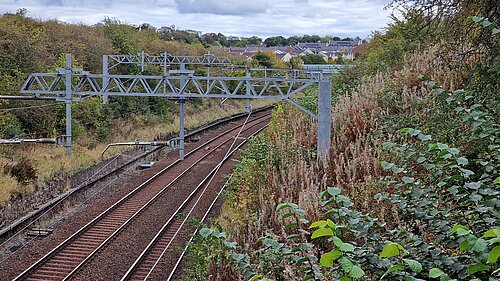
Winchburgh has grown rapidly. Its population is reported to be approaching 14,000, and outline permission in 2012 envisaged a development of more than 3,000 homes. Residents have been told for years that a station on the Edinburgh–Glasgow line would follow. It has not. Planning consent was granted in October 2025, but funding has not been confirmed. This autumn the Transport Secretary told Parliament that delivery is a matter for West Lothian Council and the developer.
The conference motion, Homes Around Stations, calls on the Scottish Government to create zones of around 800 metres, roughly a ten-minute walk, around stations. It also calls for a statutory presumption in favour of higher-density, mixed-use development in those zones, and for a national programme to identify public land near transport hubs.
What Station Growth Zones would have meant for Winchburgh
- Fewer car journeys. An independent Systra report estimated that a Winchburgh station could remove around 1,658 car journeys a day, replacing slow journeys on congested roads with train trips of under 15 minutes. Planning homes around a station from the start locks in that benefit.
- A town built around its transport link. Under a Station Growth Zone approach, the station and the homes near it would be planned together. New residents would not have moved in on the promise of a station that never arrived.
- Less pressure on neighbouring towns. Winchburgh commuters add to congestion in places like Linlithgow and Bathgate.
- A stronger local centre. More people living within a short walk of the station means more footfall for shops and services, and a more viable, better-used station once it opens.
- Clarity on who delivers. The motion’s call for a national programme to identify public land near transport hubs reflects a wider principle: transport and housing should be planned together rather than left to a funding stand-off between developer, council and government.
John MacKenzie, Scottish Liberal Democrat candidate for the Broxburn, Uphall and Winchburgh ward in 2027 said:
“Winchburgh is a clear example of what goes wrong when housing and transport are planned separately. Thousands of families have moved in and the developer has invested heavily in roads, but the station that was promised is still not funded.
“Station Growth Zones would put the station and the homes at the heart of the same plan. That means shorter journeys, cleaner air, less congestion on the M9 and a thriving local centre. The Scottish Government has the powers to do this now, and Winchburgh residents have waited long enough.”
Councillor Sally Pattle, Scottish Liberal Democrat elected member for Linlithgow, said:
“Building more homes within walking distance of high-quality public transport is a win-win for everyone. It reduces dependence on private cars, supports town and city centres, and improves the viability of public transport. To create sustainable communities that are fit for the future, we must plan smarter: accessible public transport is at the heart of that.”